
FIRST CALL
Ask 211 about local transportation help
One conversation can identify county services, partner referrals and emergency alternatives. 211 is a referral service, not a vehicle donor.
Build my call planLOCAL TRANSPORTATION ASSISTANCE / 211 & COMMUNITY PROGRAMS
Direct answer
To find a local donated car, call 211, contact your county Community Action Agency, and ask churches or nonprofit garages about active vehicle awards and repair help. Confirm the provider serves your ZIP code, accepts referrals, and transfers cars directly before sharing documents or money.
A search for car donation near me can lead to a company picking up donated vehicles rather than a charity helping a family obtain one. Start with our free car assistance options for low-income households, compare the Charity Cars application process, or see how vehicle grants and affordable loans differ from a donated car.
If you are looking for a church, an agency caseworker, or a garage that can help you keep your job, begin with a real local contact. The organizations below offer different kinds of help. Not every one of them distributes cars, and none can promise that an available vehicle exists in your county.

For local applicants: 211 connects callers to services, and Community Action Agencies explain county-level support. Neither guarantees a vehicle. Ask for the real intake office serving your ZIP code.
FIRST CALL
One conversation can identify county services, partner referrals and emergency alternatives. 211 is a referral service, not a vehicle donor.
Build my call planWORK & TRAINING
Ask which agencies serve your ZIP code and whether approved work plans include repairs, rides, transit or a vehicle-related referral.
Find a county routeCHURCHES & NONPROFITS
A garage ministry may fund repairs while a donation fundraiser auctions cars. Confirm the exact recipient-facing service.
Compare local programsLOCAL HELP PLANNER · INFORMATION STAYS IN YOUR BROWSER
Choose your state and the help you need. We will prepare a practical call plan for 211 and your local Community Action Agency. These organizations decide which local resources are actually available.
The best next step is knowing whether a provider awards a vehicle, helps with repair costs, arranges a ride or offers a loan. The sections below explain what to ask and how to prepare before disclosing personal information.
United Way 211 is a practical place to begin because transportation resources are usually organized by county or service district. You can dial 211 or visit the local search at 211.org. Tell the specialist your ZIP code and what you need to reach: a job, a training course, a child's daycare, a health appointment, or a repair shop. A concrete need is easier to match than a broad request for a giveaway.
Ask whether any organization currently awards cars directly to households. Then ask separately about emergency rides, work-related repairs, van services and nonprofit partner referrals. A 211 worker may be able to point you to a nearby charity, but 211 does not own a vehicle fleet or make award decisions itself.
Write down the organization name, the service county, a public intake phone number, any referral requirement and the date of your call. If there is no vehicle program, ask for another transportation option that could solve the immediate problem. The point is to leave the conversation with a real next contact, not a promise from an online advertisement.
Community Action Agencies work with households facing financial barriers, but their programs vary widely. The National Community Action Partnership finder lets you search by ZIP code, county, state or agency name. If a listing covers several counties, contact that agency and confirm it handles your specific address and transportation concern.
Ask to speak with someone who knows about workforce supports, local transportation grants, Community Services Block Grant-funded services, and partnerships with nonprofit garages. Some agencies can provide a transit pass, limited repairs, a ride to training, an emergency voucher, or a referral to a separate vehicle charity. These are possibilities to ask about, not benefits every office is required to offer.
When the staff member asks why transportation matters, provide your shift start time, the distance from home to work or childcare, and why existing bus routes cannot solve the problem. If a social worker can issue a formal referral, ask which vehicle program receives it and whether you should complete a second application. Never assume a referral alone reserves a car.
Families receiving Temporary Assistance for Needy Families may be able to ask their county caseworker about employment-related transport. Federal TANF law permits states to design several kinds of supportive services, but it does not establish a nationwide free-car entitlement. A county might offer bus fare, a limited repair payment, help reaching an interview, or another service connected to an approved employment plan.
People enrolled in job training or workforce services should also ask an American Job Center whether transportation can be addressed as a supportive-service need. The answer depends on the program, funding and case eligibility. Do not purchase or repair a vehicle first expecting reimbursement without written authorization.
For a parent working split shifts, a route that reaches work but not after-school pickup may not be adequate. Explain the entire trip chain. If your main obstacle is childcare scheduling, the single-parent transportation article covers TANF, school travel and family-safety considerations in more detail.
Some congregations maintain a benevolence fund or work with volunteer mechanics. Others organize short-term rides, give fuel assistance, help pay for a necessary repair, or refer families to a social-service partner. There is no universal church application, and a congregation taking vehicle donations does not necessarily provide vehicles to individuals.
Call the church's publicly listed office and ask who manages the benevolence program. A useful question is: “Does your congregation have an active transportation fund, a repair ministry, or a charity partner that transfers safe used cars to qualified households?” Follow it with “Is the program for residents of my county, and does a caseworker need to refer me?” This is much more specific than asking whether the church gives away cars.
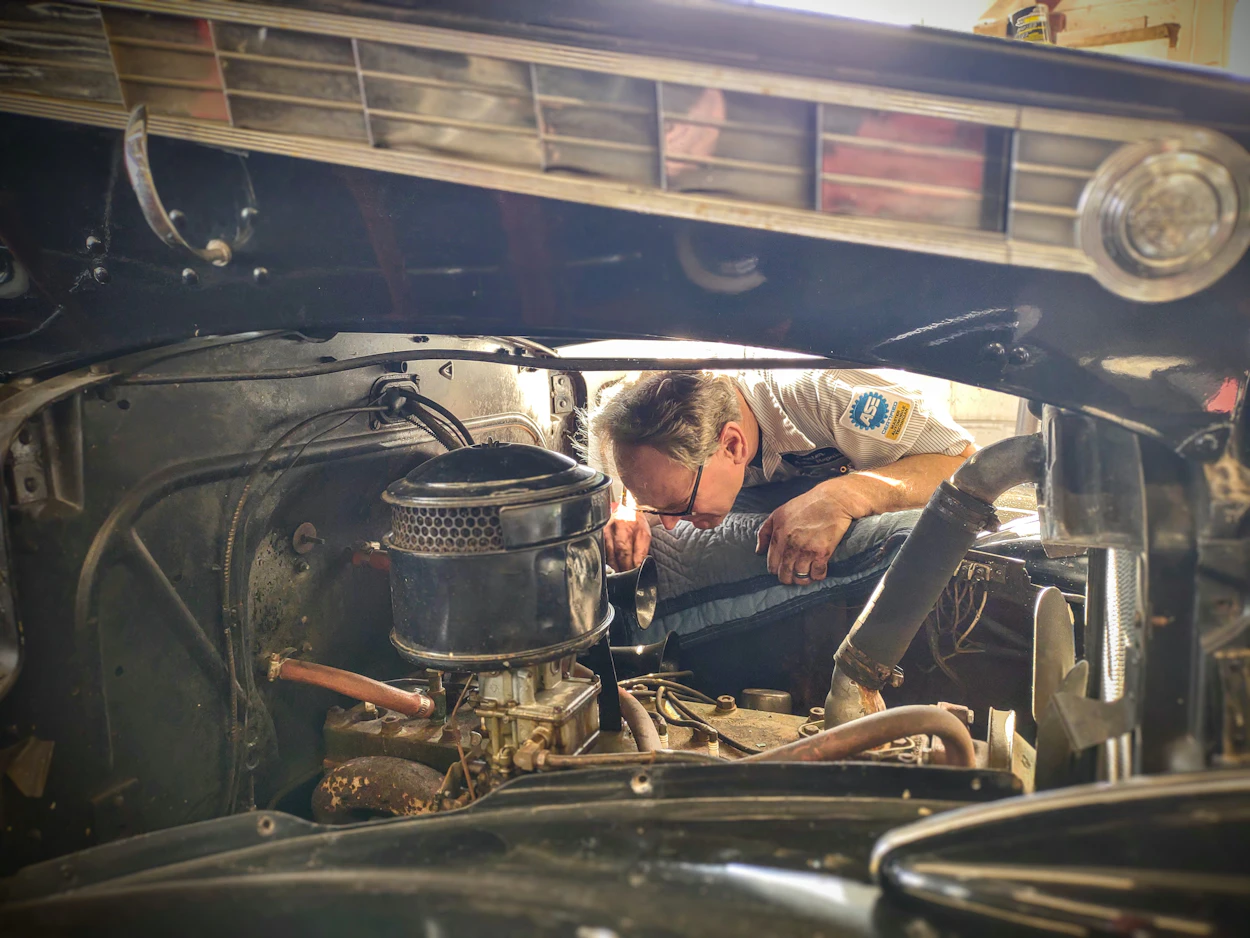
If the church partners with a repair shop, ask whether an inspection is required, who authorizes the work, and whether the applicant must contribute to parts or labor. A ministry may have more capacity to fix the car you already own than to provide a second vehicle. For urgent mechanical problems, compare repair assistance and work-retention options before joining a donated-car waiting list.
Society of St. Vincent de Paul conferences make decisions at the parish or local council level. Depending on resources, a conference may provide emergency financial help, a ride, a transportation referral, or support toward a necessary expense. Do not assume there is a nationwide St. Vincent de Paul automobile grant. Find the conference serving your neighborhood and ask what transportation support, if any, it currently offers.
Salvation Army service centers and local commands also operate different assistance programs. A center that helps with food, utilities or crisis needs may not have the funds or authority to purchase or award a vehicle. Ask whether the office works with a local workforce center, transit provider, caseworker or nonprofit garage.
When speaking to either organization, ask about income criteria, residency, appointment availability and required documents. Avoid emailing benefit cards, identifying numbers or bank records to a general address. If a staff member says the local office does not provide vehicles, ask whether the office can refer you to an actual car-award partner or a short-term alternative.
Goodwill organizations are locally operated affiliates. The national organization's career-support materials describe employment coaching, training and connections to community support, which can sometimes include transportation. That does not mean every affiliate offers a vehicle, or that an older “Wheels to Work” program remains active in every region.
Contact the nearest Goodwill career center and ask whether its employment services include commuter rides, transportation vouchers, a car-repair partner or an external vehicle referral. If you already work with a job coach, bring the question to that person rather than applying through a donation pickup page.
Ask whether you must be enrolled in job services or have a documented employment plan. If the answer is no, request the name of the local agency that actually handles work transportation. You may also find help through SNAP employment and training or other benefit-related travel supports, though SNAP or Medicaid enrollment by itself is not a car award.
The phrase “donate your car” usually speaks to the donor, not the person who needs a car. Many legitimate organizations accept vehicles and sell them at auction to fund food banks, youth programs or other community services. Their donor intake line may have no recipient-facing vehicle application at all.
A direct-award charity evaluates applicants, checks donated inventory and, if a household is selected, transfers a vehicle under written conditions. A subsidized purchase program may repair a car and offer it for a lower price. A loan program finances a purchase and requires repayment. These four arrangements have very different financial consequences.
Ask the staff member: “Does your organization actually place vehicles with households, or are all vehicles sold to fundraise?” If it transfers cars, ask about the recipient criteria, title, safety inspection, partner referral and any contribution. IRS Form 1098-C relates mainly to donors' tax reporting, not an applicant's right to receive a vehicle. See our comparison of organizations that provide different car-help routes for national and regional examples.
A safe transfer requires more than a private message promising car keys. The organization or donor should establish who legally owns the vehicle, whether the title is clear, and whether there is a lien or a pending registration issue. A nonprofit may inspect, repair or decline a donated car before deciding if it can be safely placed with an applicant.
Ask who is responsible for the inspection and whether the vehicle has a documented mechanical history. The required safety, emissions and registration steps differ by state. A family may also need to arrange insurance before collecting the car, even when the purchase price is zero. If the donor is transferring the vehicle directly, use your state's DMV guidance on private ownership changes and never sign incomplete title documents.
A genuine nonprofit should be able to explain the process in writing, including whether fees are paid to the DMV or program and the correct name of the receiving organization. Requests for gift cards, cryptocurrency or unknown “shipping agent” payments are strong reasons to stop and verify independently.
Before calling, put your ZIP code, county, work or school location and the help you need on one page. You do not need to reveal a Social Security number or EBT PIN just to ask which program serves your area. The interactive local call planner above can help you prepare a short request without transmitting your entries to this website.
What to say: “I live in this county and need dependable transportation for work, childcare or an essential appointment. Are there active car-award programs, work-related repair funds or transportation referrals in my ZIP code? Can you tell me the agency's official intake phone number and whether it requires a caseworker referral?”
For a formal application, the receiving provider may ask for proof of residence, a pay statement or benefit notice, a job schedule, childcare arrangements, a valid license or approved household driver, and evidence of the transportation barrier. Requirements differ by program. Keep sensitive records private until you have verified the official portal or a trusted caseworker's instructions.
Record the outcome after each call: intake open or closed, next appointment, documents requested, referral partner and any written fees.
A charity may be genuine and still have no car available. Vehicle inventory depends on local donations, repair capacity and a suitable match to the household. Before spending weeks on an uncertain waitlist, ask whether you can receive short-term rides, a repaired vehicle, work-related fuel support or transportation through your child's school or care provider.
Regional direct-award organizations sometimes require residence inside a specific county or an agency referral. Do not assume a program in a neighboring state will take your application. Ask whether the local caseworker knows an alternative provider that serves the same ZIP code.
If you need a replacement car rather than a donated vehicle, examine state purchase assistance and CDFI financing carefully. A loan has payments and should never be marketed as a free gift. For a working family with childcare travel, family transportation assistance may offer more realistic short-term options.
A “free” vehicle can still bring ownership costs. Ask about your state's title-transfer process, registration, tags, inspection and emissions checks. Mandatory liability coverage, a first insurance deposit, fuel, tires and maintenance can be significant when the family budget is tight. The cost depends on location, vehicle and insurance record; no single nationwide amount is reliable.
If a charity asks for a participant payment, request an itemized explanation and compare it with the program's published rules. Paying a genuine DMV registration charge is different from sending money to an unknown social-media contact for “release” of an uninspected vehicle.
It is better to prepare a realistic monthly ownership budget than to accept a car you cannot legally insure or safely operate. Ask whether a garage partner offers an initial inspection or a limited warranty and what it excludes. The cheapest available car is not necessarily the most affordable car to keep.
Scammers know that people search for urgent help near home. They may copy a nonprofit's logo, claim to work with a government agency or demand a small advance payment for delivery, registration or priority access. A local-looking phone number, search ad or social-media account is not proof that the offer is connected to the charity.
Use the organization's name and website from its own established records, not a link sent to you by an unexpected caller. For organizations claiming tax-exempt status, the IRS Tax Exempt Organization Search helps check legal identity; it does not certify that any particular car exists.
Never send your SSN, EBT PIN, payment card, full driver's license number or private medical records to ApplyFreeCar.com or an unverified intermediary. Stop when an offer demands gift cards, wire transfers or cryptocurrency to unlock a supposed free government car. Report a questionable listing through our editorial contact page.
SUPPORT, COSTS AND APPLICATION ROUTES
Program rules, local service areas, budgets and waitlists change. Ask the receiving provider to confirm current intake before applying.
| United Way 211 | County assistance and referral information | ZIP or county; tell the specialist your need | No 211 referral fee | Local 211 Official information ↗ |
| Community Action Agency | Workforce transportation or community referrals | Local agency and funding rules | Program-specific | Agency locator Official information ↗ |
| County TANF / Work-First | Work transport, repair or transit when authorized | State rules and casework plan | Varies by state and county | State office Official information ↗ |
| American Job Center / WIOA | Possible job or training commute support | Enrolled services and local authorization | Program-dependent | Local center Official information ↗ |
| St. Vincent de Paul conference | Local benevolence or transport referral | Neighborhood conference and resources | No universal charge; ask locally | Local conference Official information ↗ |
| Salvation Army service center | Local crisis aid or transportation referral | Office funding and case review | Office-specific | Find help Official information ↗ |
| Goodwill career center | Employment services and referral options | Local affiliate participation | Program-specific | Career support Official information ↗ |
| Church garage or benevolence fund | Possible repairs, rides or direct referrals | Congregation and local ministry rules | Check written costs | Ask via 211 Official information ↗ |
| Good News Garage | Regional donated vehicles or Vermont rides | VT/MA partner referrals; no public intake | Program-specific | See regions Official information ↗ |
Program inventory, fees and processing times may change. Verify current intake directly. Click column headers to sort.
This historical policy log preserves program context. Former incentives must not be presented as currently available grants.
| Period | Program development |
|---|---|
| 2017–2019 baseline | IRS Publication 4303 and Form 1098-C donor documentation; 501(c)(3) direct-award vehicle charities; TANF Work-First transportation policies. |
| 2020–2022 transition | Pandemic-related used-car shortages; emergency transport, work-retention repairs, TANF and Community Services Block Grant support. |
| 2023–2025 expansion | State clean-air replacement programs and CDFI vehicle loans developed in some regions. Federal clean-vehicle tax credits ended for vehicles acquired after September 30, 2025. |
| 2026 review cycle | Recheck 1-800-Charity Cars, Good News Garage, Working Wheels, VA automobile allowance rates and county TANF repair assistance directly with providers. |
Call 211 and a Community Action Agency serving your ZIP code, then ask which partner actually transfers vehicles to families. A car-donation pickup company may only sell vehicles at auction to raise funds.
Some congregations help with repairs, rides or direct vehicle placements, but programs differ by church and budget. Ask about a current recipient application and whether a caseworker referral is required.
No. 211 offers local information and referrals; it does not own or award a national vehicle fleet. The program that receives your referral decides whether assistance is available.
Some local agencies can arrange job-related transportation services or approved expenses, but a car purchase is not guaranteed. Ask your county agency for its current funding rules and required approval.
That may be a fundraising program that sells vehicles rather than giving them to applicants. Contact the organization and ask if it has a distinct direct-distribution program with current recipient intake.
No universal national car grant has been established through those local service networks. A conference or service center might offer another form of transportation help depending on local resources.
Ask county workforce programs, nonprofit garage partners and local faith-based funds about approved repairs. Repair assistance may be faster and less expensive than waiting for a donated vehicle.
Title transfer, registration, tags, legal insurance, inspections, fuel and maintenance may still be required. Always get written costs from the actual provider and check your state's DMV rules before accepting the vehicle.
Compare our main free car options, then use the actual program's official requirements before applying.